
Juxtaposed Tides — Carolina’s Night Skies October 2026 Edition

October 2026: Saturn Takes the Night, Jupiter Disappears, and Autumn Goes Properly Dark
It is hard to start this months article without first giving major kudos to last months shower of celestial goodies! September 2026 did not let down! First, did anybody see the full of the latest lunar eclipse? We made a go at viewing from a beautiful vantage, but an unfortunate storm blew in just as it was getting good. However, we did manage to capture a little bit of the action, not to mention, during events like this there is just a certain buzz in the air around you. Maybe the lightning just over our shoulder, over the
mountain crest was causing the buzz...who knows.
But getting to September's glorious moon shows, all month, not only including that PERFECT display of a harvest moon, but many nights of great size and just the right shade of orange to bring in these cool nights of fall!

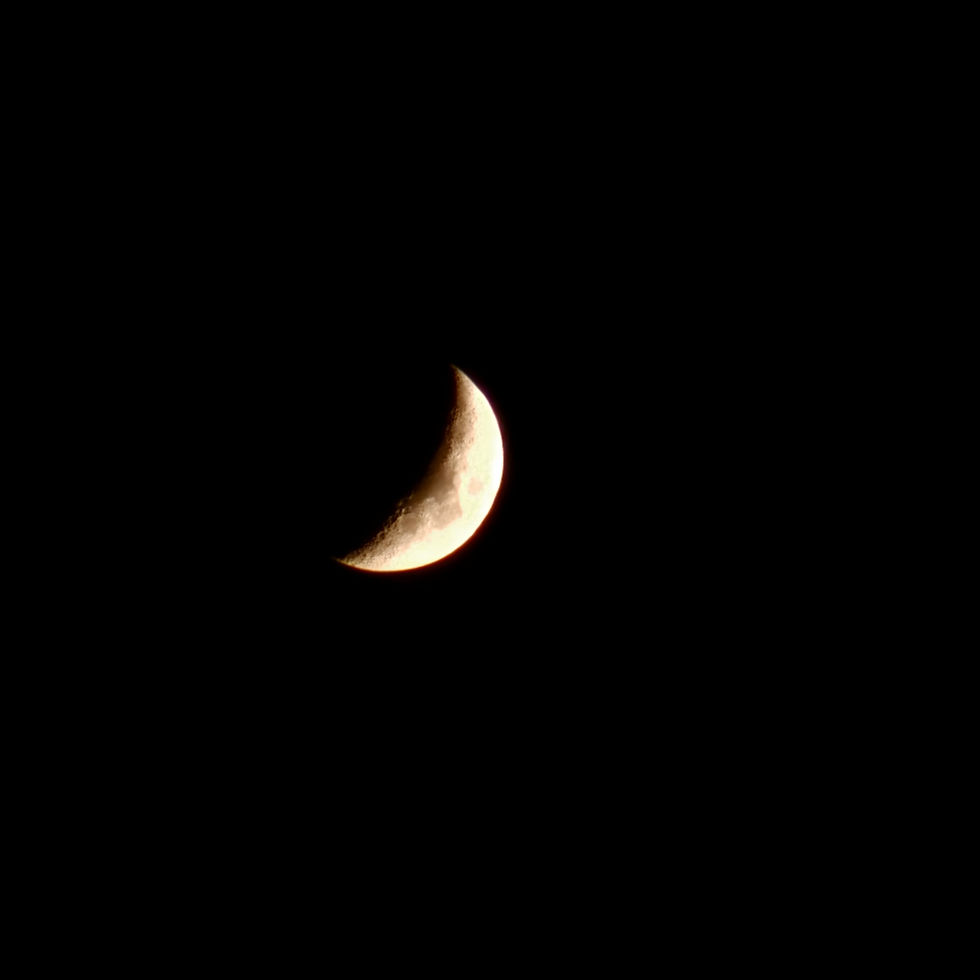
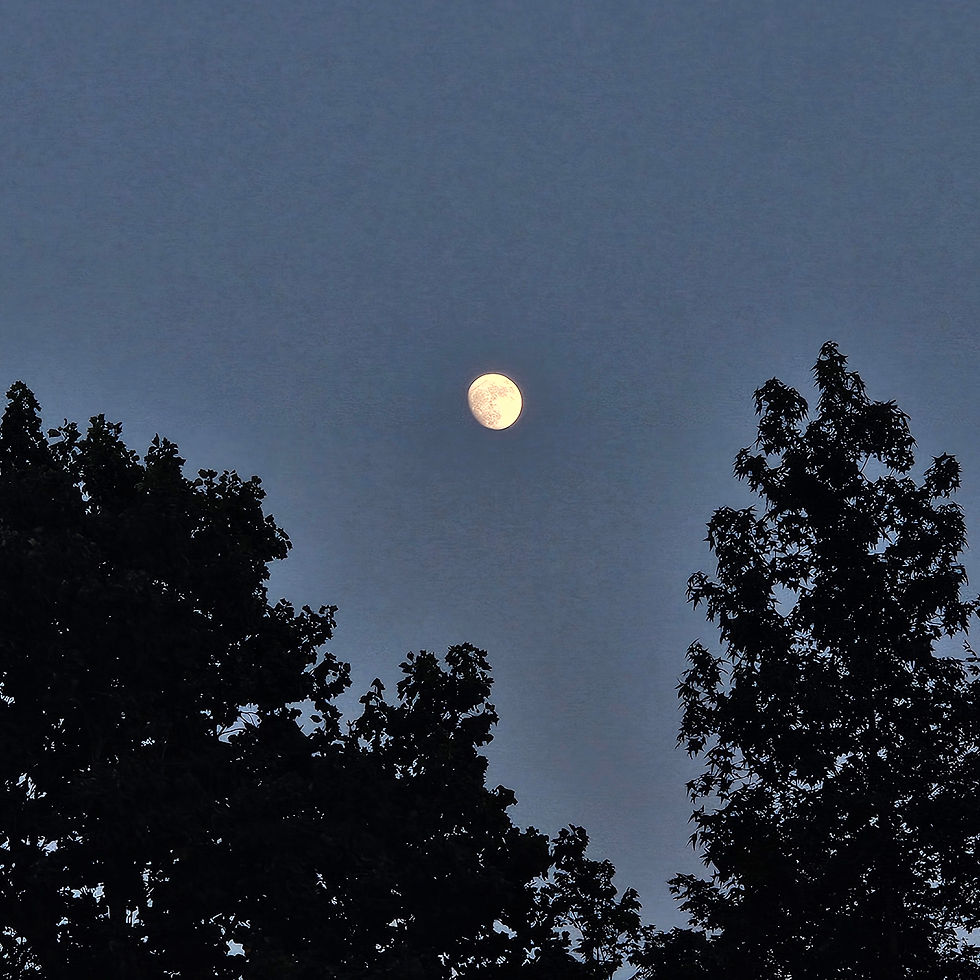

And, so far, full moon of the year for this September's full Harvest moon! Also, lo! a birthday moon, for many, but for one special shining light of a soul, one of our own here at Juxtaposed Tides, happiest of birthdays to Ali! Much of what we do here at Juxtaposed Tides simply wouldn't be without her dedication and love. What a moon show for a special being!
And now for the moment we have all been waiting for...

October in Carolina is when the night finally starts feeling like night again.
The air changes first. Humidity begins loosening its grip, though, thankfully, it hasn’t been too bad this year. Ridge tops turn sharp and cold after sunset, a nice reprieve from those 90 degree dog days of September, with that heat that lingers into the night. The coast starts trading summer haze for those cleaner, crisper horizons that make a bright planet look almost close enough to touch, if you can escape the fog. Somewhere between the first sweater you regret not bringing and the first breath that shows faintly under a mountain sky, the whole season seems to tilt.
And overhead, October 2026 tilts with it.
Saturn reaches opposition and owns the night. Two mornings later, the Moon actually passes in front of Jupiter. The Draconids arrive almost perfectly timed with New Moon. Mercury makes one of its widest evening excursions from the Sun, even if Carolina’s autumn horizon makes us work for it. The Orionids return from Halley’s Comet, but moonlight refuses to make that one easy. Then the Hunter’s Moon rises into late October while Jupiter, Mars, and Regulus build a gorgeous pre-dawn line across the eastern sky.
This is one of those months where the sky does not hand you one giant spectacle and go home.
It keeps changing the assignment.
One night calls for a telescope. One calls for nothing but a blanket and a dark northern sky. One demands an alarm clock. One wants a telephoto lens and a carefully scouted eastern horizon. And one—the New Moon stretch—is simply a request to get somewhere properly dark, kill the white lights, and let October show you how many stars were there the whole time.
So this month, do not just ask, “What is happening?” Ask the better question: “Which night am I actually going outside?”
We have you covered.
First: The Carolina Reality Check
This guide is written for North Carolina and the surrounding Virginia/Carolina region. All clock times are Eastern Daylight Time unless otherwise noted. Exact rise times, occultation contact times, object altitude, and horizon direction vary across the state, so use a planetarium app such as Stellarium, SkySafari, PhotoPills, or your preferred planning tool for your exact coordinates before making a long drive.
October also brings one very Carolina-specific complication: the places with the best skies are often the places with the most variable access. Blue Ridge Parkway sections can close because of construction, storm recovery, fog, ice, fallen trees, or emergency work. Some overlooks remain physically reachable while nearby facilities are seasonal. Coastal access can involve ferry schedules or remote roads.
Check official park or NPS status the day you go. Stay in legal public areas. Never block a travel lane. Never walk around a closure. Do not assume a gravel road is public because somebody online called it a “secret spot.” And if a pull-off is full, keep moving. The stars will still be there at the next overlook.
The upside? October rewards that little bit of planning. Cooler air can mean better transparency, nights arrive earlier, and the month contains everything from naked-eye showpieces to legitimate telescope events.
TL;DR: October 2026 Night Skies — The Simple Version
October 3 — Third Quarter Moon: The Moon reaches its last-quarter phase, helping the first half of the night grow darker as the month begins.
October 4 — Saturn at Opposition: The ringed planet is opposite the Sun, rising around sunset and remaining visible essentially all night. This is Saturn’s prime viewing season.
October 5 — Moon + Mars Before Dawn: A waning crescent Moon joins reddish Mars in the pre-dawn sky, with the Beehive Cluster nearby for binocular users.
October 6 — The Moon Occults Jupiter: The headline event. Across the Carolinas and nearby Virginia, Jupiter disappears behind the waning crescent Moon before dawn and returns roughly an hour later. Plan on approximately 4:15–5:30 a.m. EDT, but exact contact times vary by location.
October 8–9 — Draconid Meteor Shower: The predicted peak falls around 9:00 p.m. EDT on October 8. This is an evening meteor shower, and the nearly moonless sky makes 2026 especially inviting.
October 10 at 11:50 a.m. — New Moon: No moonlight means the October 7–13 stretch is the month’s premium dark-sky window for Andromeda, the Double Cluster, autumn Milky Way structure, and wide-field astrophotography.
October 12 — Mercury at Greatest Eastern Elongation: Mercury reaches about 25.2° east of the Sun. The geometry is favorable on paper, but it remains low in Carolina’s western twilight. Find a flat west-southwestern horizon.
October 18 — First Quarter Moon: A strong telescope and lunar-photography night, with dramatic shadows along the terminator.
October 21–22 — Orionid Meteor Shower Peak: Typically 10–20 shower meteors per hour under ideal conditions, but a bright waxing gibbous Moon will interfere in 2026. Bright Orionids can still punch through.
October 25–26 — Hunter’s Moon: Exact Full Moon occurs at 12:11 a.m. EDT on October 26, making the evening moonrise on October 25 especially good for landscape photography.
Pre-dawn October 26 — Jupiter + Mars + Regulus: The Hunter’s Moon month closes with a beautiful eastern morning arrangement involving Jupiter, reddish Mars, and bright Regulus.
Best Overall Nights to Put on the Calendar
If you only get five chances to look up this month, build around these.
October 3–4 — Saturn Weekend: Telescope night. Opposition geometry. Rings, Titan, and a planet that is finally available at civilized evening hours.
October 6 — Jupiter Occultation: The rare one. Set the alarm, pre-scout the eastern horizon, and be ready before first contact.
October 8–10 — Draconids + New Moon: The strongest all-purpose dark-sky run of the month. Meteors, Andromeda, star clusters, Milky Way structure, and almost no lunar interference.
October 12 — Mercury Challenge: Not the easiest event, but rewarding if you have a genuinely flat western horizon and clear autumn air.
October 25–26 — Hunter’s Moon + Morning Planets: A completely different assignment: moonrise landscapes at dusk, then a bright-planet composition before dawn.
October 4 — Saturn at Opposition: The Ringed Planet Owns the Night
Saturn reaches opposition on October 4, and for practical observers, this is the moment the ringed planet graduates from “something to catch later” to “the reason to set up the telescope.”
Opposition means Earth sits between Saturn and the Sun. Saturn rises around sunset, climbs through the night, reaches its highest point around local midnight, and does not disappear into the western horizon until around sunrise. The exact mathematical instant of opposition falls during the morning on October 4, but do not let a timestamp boss you around. The nights immediately around opposition are observationally almost identical.
If October 3 is crystal clear and October 4 is cloudy, observe on the 3rd. If the 4th is perfect, use the 4th. The planet does not suddenly dim when the clock crosses an ephemeris line.
To the naked eye, Saturn looks like a steady cream-to-yellow point. It will not twinkle as aggressively as a star near the same altitude. Binoculars can help confirm the target, but a telescope is where the month changes character.
Even a modest backyard scope can reveal the rings. In 2026 the rings remain relatively narrow compared with the gloriously wide-open views many longtime observers remember, but they are clearly present. The narrow angle is not a disappointment; it is a different Saturn. Look for the gap of black sky between the planet and rings, the slightly flattened shape of the globe, and Titan standing nearby as a tiny point of light.
With more aperture and steady air, additional moons come into reach and subtle atmospheric banding becomes possible. The real limiting factor is often not telescope size. It is seeing—the steadiness of the atmosphere. A cold, clear night can still shimmer like boiling water if upper-air turbulence is bad.
Give Saturn time. Do not look for fifteen seconds and declare the view soft. Sit at the eyepiece. Wait for those half-second moments when the air steadies and the ring system snaps into focus. Planetary observing rewards patience in a way wide-field stargazing does not.
Photographer’s Play: Saturn Is a Video Target, Not a Landscape Target
If the goal is actual detail in Saturn’s rings, think planetary imaging rather than a single still frame. A telescope, planetary camera—or a camera capable of high-frame-rate video—and stacking software will usually beat one heroic exposure. Record thousands of frames, let software rank the sharpest moments, stack the best fraction, and sharpen carefully.
If you are shooting a wide Carolina landscape instead, use Saturn as a bright celestial anchor above a ridge, fire tower silhouette, lake, or field. Just be honest about what the lens can resolve. A 24 mm lens is going to show Saturn as a point. That is not a failure. The story in that frame is the place.
October 5 — A Quiet Dawn Warm-Up: The Moon Finds Mars
Before October gives us the big Jupiter occultation, it offers a quieter pre-dawn rehearsal.
On the morning of October 5, the waning crescent Moon sits near Mars. Mars is modest right now—not the enormous red beacon it becomes around a great opposition—but its warm color is enough to separate it from the surrounding stars once your eye knows where to look.
The Beehive Cluster, M44, is also in the neighborhood. The cluster is much easier in binoculars than with the naked eye from suburban skies, where its faint stars are quickly washed out. Under dark conditions it can look like a soft patch before the binoculars resolve it into a loose spray of stars.
[insert bee hive cluster image and article link to more on that cool thing (upgrade that article if necessary].
Think of October 5 as reconnaissance. Find your eastern horizon. Note which trees, rooftops, ridges, or mountains will matter the next morning. If Jupiter is going to disappear behind the Moon at 4-something in the morning, you do not want to discover at 4-something in the morning that your entire view is blocked by a church steeple (unless it just fits the shot, of course!).
October 6 — Jupiter Disappears Behind the Moon
This is October’s big one.
Early on Tuesday, October 6, the waning crescent Moon passes directly in front of Jupiter for observers across a broad portion of eastern North America, including the Carolinas and nearby Virginia. It is a lunar occultation: one world literally blocks another from our line of sight.
For much of our region, use roughly 4:15 to 5:30 a.m. EDT as the planning window. Exact contact times shift by several minutes with longitude and latitude. For comparison, the NASA/JPL Night Sky Network event in Virginia Beach lists Jupiter beginning to disappear at about 4:20 a.m. and beginning to re-emerge around 5:24 a.m., fully visible again about two minutes later. Locations farther west in North Carolina will see the contacts somewhat earlier.
That timing difference is exactly why you should not drive to an overlook armed only with one statewide timestamp. Put your observing location into a reliable planetarium app the night before, or consult a local occultation prediction.
The Moon is only around one-fifth illuminated—a slender waning crescent hanging low in the east. Jupiter is bright enough to be obvious. Then, over the course of moments, it reaches the lunar edge and is gone.
And the weird part is the silence.
Nothing flashes. Nothing explodes. Jupiter does not dim like a light switch. One of the brightest objects in the night sky simply reaches the edge of the Moon and gets geometrically erased. (Yeah, yeah, I know, good luck finding any human left that sits still that long…and actually gets excited about it, to boot).
About an hour later, it returns.
With the naked eye, the disappearance is fascinating. With binoculars, it becomes intimate. With a small telescope, the scale is ridiculous: Jupiter is a visible disk with moons of its own, while our much nearer Moon slides in front of the entire system.
How to Watch the Occultation Without Missing It
Scout the eastern horizon on October 5. This event happens low enough that trees and ridges matter.
Be completely set up at least 20 minutes before your local first-contact time. Do not arrive at 4:19 for a 4:20 event.
Use binoculars or a telescope if you have them, but the event is bright enough to follow with the naked eye.
If imaging through a telescope, expose for the Moon rather than Jupiter. Jupiter is bright, but the lunar crescent can still dominate the dynamic range.
Record video through the contact. The most interesting frames are often easier to extract later than to nail as one still.
Do not forget the reappearance. Half the event happens after Jupiter is gone.
Photographer’s Play: Tell the Whole Story
There are two good ways to photograph an occultation like this, and they tell completely different stories.
The first is the telescope view: lunar limb, Jupiter, Galilean moons, disappearance. Use enough focal length to make the interaction legible and shoot bursts or video across the contact.
The second is environmental: a thin Moon and Jupiter in the predawn sky over a Blue Ridge silhouette, barn roof, treeline, coastal horizon, or city skyline. You will not resolve the occultation itself with a wide lens, but you can make an image that communicates what it felt like to be standing there.
Those are both legitimate astrophotography. One documents the mechanics. The other documents the night.
October 8–9 — The Draconids Get the Moonless Stage They Deserve
The Draconids are strange little meteors.
Most meteor showers train us to think in terms of midnight, 2 a.m., 4 a.m.—the later, the better. The Draconids flip that script. Their radiant is highest in the evening, so the first hours after darkness falls can be the prime time to watch.
The predicted 2026 peak is around 1:00 UTC on October 9, which translates to about 9:00 p.m. EDT on October 8. That is beautifully convenient. Dinner. Drive. Dark. Meteors.
And the Moon is almost completely out of the way.
New Moon arrives on October 10, so the evening of the 8th is nearly moonless. This matters more than a flashy hourly-rate number. Draconid rates are modest in ordinary years—roughly in the five-to-ten-per-hour territory under ideal dark conditions depending on the source and actual shower performance. Meteor showers are not vending machines. A quoted rate is not a guarantee that you personally will see one meteor every six minutes.
What 2026 gives us is the right background: dark sky, an evening-friendly radiant, and a peak that falls at a reasonable hour.
Look generally north and northwest after nightfall. The radiant lies in Draco near the stars Eltanin and Rastaban—the Dragon’s Eyes—but do not stare at the radiant. Meteors can flash anywhere. In fact, trails farther from the radiant often look longer because of perspective.
Find the darkest legal site you can reasonably reach, lie back, keep as much sky in view as possible, and stay longer than twenty minutes. Your eyes need time to dark-adapt and meteor watching is statistical. The universe does not care that your coffee is getting cold.
What Would Make the Draconids Go Wild?
The Draconids are associated with Comet 21P/Giacobini-Zinner and have occasionally produced dramatic outbursts in the past when Earth encounters especially dense trails of comet debris. That history is why this small shower gets more attention than its normal rate would suggest.
But do not publish the word “storm” in your head before the sky earns it. No ordinary calendar forecast can promise an outburst. Go because the Moon conditions are superb and the shower is interesting. If October decides to throw extra meteors at us, take the gift.
Photographer’s Play: Set It and Look Up
Wide lens. Fast aperture. Manual focus. Stable tripod. Interval shooting.
That is the whole philosophy.
Frame a strong northern or northwestern composition and let the camera work for an hour or three. Use an exposure length that keeps stars acceptably sharp for your focal length, then leave enough gap between frames to avoid missing too much sky. If your camera supports back-to-back interval shooting with minimal delay, use it
.
Do not spend the entire meteor shower hunched over the rear screen checking whether you caught a meteor. The camera can watch the camera. You watch the sky.
October 10 — New Moon: This Is the Dark-Sky Weekend
New Moon occurs at 11:50 a.m. EDT on October 10.
The exact instant is not visually dramatic because the Moon is near the Sun and essentially invisible. What matters is the multi-night darkness around it.
October 7 through roughly October 13 is the stretch to protect on your calendar if deep-sky viewing or astrophotography is the goal. The 8th and 9th are especially delicious because the Draconids are active at the same time.
This is not September’s Milky Way-core game anymore. By October, Sagittarius and the bright galactic center are dropping out of easy evening reach. But the Milky Way itself is still very much alive. Cygnus hangs through the western sky. Cassiopeia climbs high. Perseus is rising into a better position. The galaxy’s autumn and winter structure replaces the blazing summer core with a colder-looking river of star fields, dark lanes, and clusters.
Andromeda is the obvious headline.
From a genuinely dark site, the Andromeda Galaxy—M31—is visible without optical aid as a faint elongated smudge. Binoculars transform it immediately. A small telescope shows the bright core well, although the galaxy is so large that low magnification is often more satisfying than trying to bury it under power.
Then swing over to the Double Cluster in Perseus. It is one of those objects that turns a person who thinks binocular astronomy sounds boring into somebody who does not want to hand the binoculars back. Two dense sprays of stars sit side by side, rich enough to look almost artificial.
The Pleiades are returning too, climbing higher as the night gets later. By late October, Orion begins creeping into the post-midnight conversation. Winter is not here, but its stars are already sending advance scouts.
October’s Best Deep-Sky Targets
Andromeda Galaxy (M31) — Naked-eye challenge from truly dark skies; magnificent in binoculars; excellent wide-field photo target.
Double Cluster (NGC 869/884) — One of the best binocular targets in the entire autumn sky.
Pleiades (M45) — Better every week as Taurus climbs earlier. Beautiful naked-eye and binocular target.
Cassiopeia — The W-shaped constellation is both a landmark and a doorway into dense Milky Way star fields.
Cygnus — Still carrying rich Milky Way structure in the west, especially early in the month.
Great Square of Pegasus — A giant autumn signpost that helps orient you toward Andromeda.
October 12 — Mercury at Greatest Eastern Elongation: Best on Paper, Still a Carolina Challenge
Mercury reaches greatest eastern elongation on October 12, about 25.2 degrees east of the Sun.
That is one of the corrections worth making to rough event lists floating around online. This October elongation is about 25 degrees, not 19.6 degrees. The smaller 19.6-degree figure belongs to a different Mercury elongation later in the year.
Greatest eastern elongation means Mercury is an evening object and, geometrically, as far from the Sun as it gets during this particular appearance. That sounds like a slam dunk.
Carolina has other ideas.
The autumn evening ecliptic meets the western horizon at a shallow angle for Northern Hemisphere observers, so Mercury stays low even when its angular separation from the Sun is respectable. Think west-southwest, shortly after sunset, with absolutely no trees, buildings, or mountains in the wrong place.
A coastal horizon can be wonderful. So can an open Piedmont field. A mountain overlook is only useful if the mountain is behind you instead of sitting exactly where Mercury needs to be.
Binoculars can help pick Mercury out of the twilight, but wait until the Sun is completely below the horizon before sweeping the area. Never hunt an inner planet with binoculars while the Sun is still up.
Once you find Mercury in binoculars, lower them and see if you can recover the planet with your unaided eye. That little switch—from optical aid to naked-eye recognition—is one of the most satisfying ways to learn twilight planets.
Photographer’s Play: Mercury Needs Foreground
Mercury is tiny in a normal camera lens. Do not fight that. Make it part of a twilight landscape.
A low ridge, pier, water tower, lone tree, barn, lighthouse, or skyline gives the eye a scale reference and makes a point of light matter. Shoot while there is still color in the sky. If the foreground falls too dark, bracket exposures rather than crushing the shadows into fake daylight.
October 18 — First Quarter Moon: The Moon Is Better Before It Is Full
The Moon reaches First Quarter on October 18.
Full Moon gets the social-media attention. Quarter Moon gets the shadows.
Along the terminator—the moving boundary between lunar day and lunar night—craters, mountains, ridges, and walls throw long shadows that make relief jump out in a telescope.
Features that look flat and washed out near Full Moon can become dramatic here.
This is a great backyard night. No dark-sky pilgrimage required. Put a telescope on the driveway, invite somebody outside, and move slowly along the terminator at moderate magnification.
If the air is unsteady, back off the magnification. Bigger is not automatically better. A crisp 100x view beats a boiling 250x view every time.
October 21–22 — The Orionids Return, but the Moon Does Not Cooperate
The Orionids peak overnight October 21 into October 22, and on a moonless year this is one of October’s most reliable meteor events.
The shower comes from debris left behind by Halley’s Comet. The meteors are fast—about 41 miles per second—and a normal maximum can produce roughly 10 to 20 shower members per hour under ideal dark conditions.
2026 does not give us ideal dark conditions.
The American Meteor Society lists the Moon at roughly three-quarters illuminated—a bright waxing gibbous—on the peak night. That is enough light to erase many faint Orionids.
This does not make the shower worthless. It changes the strategy.
Bright Orionids can still cut through moonlight, and fast meteors sometimes leave persistent trains. If your schedule allows, favor the darker interval after the Moon gets lower or sets and before dawn begins. Keep the Moon behind a tree, building, ridge, or your own body so direct glare is not wrecking your night vision.
And do not stare at Orion. The radiant is near Orion, but meteors can cross huge portions of the sky. Aim your attention 45 to 90 degrees away from the radiant for longer-looking tracks.
If you only get one meteor night this October, the Draconids have the cleaner lunar setup. If you are a meteor person anyway, the Orionids are still absolutely worth a cold chair and a thermos.
Work Around the Moon Instead of Pretending It Is Not There
A bright Moon can be the enemy of faint meteors, but it can also light the landscape.
Try compositions where the Moon is outside the frame while its light softly illuminates autumn trees, fields, rock faces, or mountain ridges. Keep your lens shaded from direct lunar glare. Use a wider field and let the bright meteors be the bonus.
The goal is not to manufacture a dark-sky image on a bright night. It is to make the bright night look good.
October 25–26 — The Hunter’s Moon Takes Over
October’s Full Moon reaches exact full phase at 12:11 a.m. EDT on Monday, October 26.
That puts one of the best landscape-photography opportunities on the evening before: Sunday, October 25, when the nearly exact Full Moon rises in the east around sunset.
Near the horizon, the Moon can look yellow, orange, or amber because its light is traveling through more atmosphere. The Moon itself is not physically changing color. Carolina’s atmosphere is doing the painting.
This is the Hunter’s Moon, the traditional name for the full Moon following the Harvest Moon. The name comes out of seasonal cycles of harvest, hunting, and preparation for winter—not because this particular lunar disk is astronomically different from another Full Moon.
For photographers, the important word is not Hunter.
It is rise.
Moonrise is where landscape, color, scale, and celestial timing all collide. A Full Moon already high in a black sky can be beautiful. A Full Moon lifting behind a distant Blue Ridge shoulder while the landscape still holds sunset color is a photograph.
How to Make the Hunter’s Moon Look Enormous Without Faking It
Use distance.
The classic giant-Moon photograph is made by putting a distant foreground subject—ridge, tower, lighthouse, silo, church, lone tree—far from the camera and then using a long focal length. Telephoto compression makes the Moon appear huge relative to that distant subject.
The Moon itself has not changed size. Your relationship to the foreground has.
Scout the alignment in advance. Planning apps can show the moonrise azimuth from your shooting position. Then arrive early enough to adjust because maps are perfect and trees are not.
Pre-Dawn October 26 — Jupiter, Mars, and Regulus Line Up the Morning
If you stay out late for the Full Moon—or wake up absurdly early after shooting it—the southeastern and eastern sky has another composition waiting.
Jupiter, Mars, and Regulus gather into a striking morning arrangement. Jupiter is the obvious bright heavyweight. Mars gives you the red-orange counterpoint. Regulus, the heart of Leo, adds a stellar anchor. The Beehive Cluster sits in the broader morning neighborhood as well, though binoculars help enormously once moonlight and suburban glow enter the picture.
This is the sort of sky geometry that looks better when you understand what you are seeing. One point is a giant planet hundreds of millions of miles away. One is the rocky world we keep sending machines to. One is a star roughly 79 light-years from us. They look like neighbors because perspective is a bender of reality.

The Planets in October 2026 — What Is Actually Worth Your Time
Mercury — A Legitimate Challenge
Best around October 12 at greatest eastern elongation, about 25.2 degrees from the Sun. It is still very low in western twilight from Carolina. Flat horizon, transparent air, binocular assist after sunset. Rewarding, not easy.
Venus — Low in the Evening, Losing the Easy Window
Venus remains an evening object but is getting increasingly difficult as its geometry pulls it toward the Sun. If you catch it low in the western twilight early in the month, use it as a brilliant landscape accent rather than expecting a long observing session.
Mars — The Rust-Colored Morning Companion
Mars is a pre-dawn object, small in telescopes but easy enough to recognize by color. The Moon helps locate it on October 5, and by late month Mars becomes part of the Jupiter–Regulus morning scene.
Jupiter — October’s Most Dramatic Planet
Jupiter is already a dominant pre-dawn object and gets the month’s wildest event when the Moon occults it on October 6. As October progresses it rises earlier and becomes more convenient. A small telescope reveals its cloud belts and the four bright Galilean moons; their positions change enough from night to night to make repeated observing worthwhile.
Saturn — The Main Evening Telescope Target
Opposition October 4. Up all night around opposition. Bright, steady, ringed, and exactly the planet to show somebody who thinks telescopes are probably disappointing.
Uranus — Getting Better, But Opposition Is Next Month
Uranus is becoming increasingly well placed in Taurus as October advances, but its 2026 opposition is in November—not October. Under dark skies it sits near the edge of naked-eye visibility, but binoculars are the realistic tool. A telescope shows a tiny pale disk under good conditions.
Neptune — Faint, But Still Well Placed After September Opposition
Neptune remains available through much of the night after its late-September opposition. It requires binoculars or a telescope and a finder chart. If you are new to faint-planet hunting, use a planetarium app and verify the surrounding star pattern instead of convincing yourself the first bluish-looking star is Neptune.
October’s Milky Way Is Not Gone — It Has Changed
If your definition of “Milky Way season” is only the bright galactic core over Sagittarius, October can feel like the party is ending.
It is not.
It is moving rooms.
The summer core is sinking into the southwest early in the evening. But the Milky Way still arches through Cygnus, Cepheus, Cassiopeia, and Perseus. Under truly dark skies, that structure can be magnificent—less obvious than the Sagittarius bulge, but richer in the kind of star fields and dark-lane texture that reward slow viewing.
October is also the month when Andromeda becomes stupidly convenient. You do not have to wait until 1 a.m. for it to climb. It is becoming an evening object, high enough to shoot well during the dark-sky window.
For photographers who spent summer pointing south, October is a good month to turn around.
WHERE TO GAZE — October’s Low-Key Carolina + Virginia Night-Sky Spots
This is the part we want to make more useful than a generic “go somewhere dark” paragraph.
The famous places are famous for a reason. But a night-sky trip does not always need a marquee destination, a two-mile hike, or fifty headlamps moving through the foreground. Sometimes the right answer is a small overlook, a legal pull-off, a purpose-built dark-sky field, or a park where the horizon simply falls away.
The following spots are chosen for a combination of real sky potential, useful horizon geometry, and legitimate public access. Conditions and road status can change quickly, especially on the Blue Ridge Parkway, so verify access the day you go.
1. The Saddle Overlook — Blue Ridge Parkway, Virginia | Milepost 168
The Saddle is one of the better low-key ridge options in the Patrick/Floyd County orbit because the geography does something unusually useful: the overlook sits on a ridge saddle with views in both the north and south directions.
That matters in October.
For Draconids, you want a broad northern/northwestern piece of sky. For Saturn, you want room across the southern half of the night. The Saddle gives you flexibility without requiring a hike into darkness.
National Park Service landscape records put the overlook around 3,380 feet and note that very few Parkway overlooks provide broad views to both sides of the ridge. It is not a giant developed destination, and that is part of the appeal.
Best October use: Saturn weekend, Draconids, binocular Milky Way/Cassiopeia sessions.
Reality check: Check the current Parkway road-status page before leaving, and never assume October weather on the ridge resembles the valley forecast. Bring layers.
2. Rock Castle Gorge Overlook — Blue Ridge Parkway, Virginia | Milepost 168.8
Less than a mile from The Saddle, Rock Castle Gorge Overlook feels completely different.
The view drops into the gorge and opens toward the distant Piedmont. National Park Service records place the overlook around 3,195 feet. The terrain itself helps create a sense of separation from scattered nearby lights, and the gorge gives photographs an actual foreground instead of an anonymous black strip.
This is a strong option for people who want quiet more than 360 degrees. It works especially well for a mixed night: shoot twilight, let darkness settle, then move into binocular astronomy or a compact telescope setup.
Best October use: Andromeda and Double Cluster nights around New Moon, autumn star fields, moonrise and pre-dawn planet landscapes when the horizon geometry lines up.
Reality check: This is still a mountain roadside overlook. Stay inside the safe parking area and away from drop-offs after dark.
3. Yadkin Valley Overlook — Blue Ridge Parkway, North Carolina | Milepost 289.8
Everybody talks about nearby Thunder Hill. Yadkin Valley is the quieter little sibling.
The pull-off is small, the parking is limited, and the reward is a panoramic look across the Yadkin Valley from roughly 3,830 feet. Local Parkway guidance specifically notes it as an excellent stargazing and sunrise view.
That smaller footprint is exactly why we like it for a low-key night. If the lot is empty and the road is open, you can work a broad sky without turning the shoot into an event.
Best October use: New Moon wide-field work, Orionid landscape attempts, eastern twilight and dawn compositions.
Reality check: Limited parking means limited parking. If spaces are occupied, do not invent one on the shoulder. Thunder Hill is immediately nearby and gives you a much larger fallback.
4. Cowee Mountain Overlook — Blue Ridge Parkway, North Carolina | Milepost 430.7
Cowee is not hidden, but it is too useful to leave off an October list.
At about 5,950 feet, it is one of the Parkway’s high-elevation overlooks. More importantly, the National Park Service describes it as southeast-facing with an unobstructed roughly 180-degree view.
That makes it a killer geometry spot for anything happening low in the southeastern or eastern sky: the Jupiter occultation, late-month Jupiter/Mars morning scenes, moonrise, and broad autumn dawns.
Elevation can help get you above some lowland haze. It can also put you inside a cloud that did not exist in the valley forecast five minutes earlier.
Best October use: October 6 Jupiter occultation if road and weather cooperate; Hunter’s Moon rise; pre-dawn planet work.
Reality check: Blue Ridge Parkway recovery and construction remain active in 2026. Cowee itself is south of several major Helene-recovery closures, but access routes can still change. Check NPS status that day.
5. Bare Dark Sky Observatory / Mayland Earth to Sky Park — Burnsville, North Carolina
This is the place to go when you want the dark-sky part handled for you.
Mayland’s Earth to Sky Park is an International Dark Sky Park, and the Bare Dark Sky Observatory houses a 34-inch public telescope for ticketed programs. The really useful detail for independent stargazers: Mayland states that the grounds provide 24-hour access to the parking area for stargazing even when the observatory building is closed.
If the gate is closed, their current instructions tell visitors to park in the designated area outside the gate and walk in. That makes this one of the rare places where “go out after midnight” is not an access gray area.
Best October use: New Moon deep-sky work, Draconids, Andromeda, serious binocular nights, telescope sessions.
Reality check: Telescope-building access is ticketed. A dark-sky park is not a promise of cloud-free weather. Check the forecast and event calendar.
6. Staunton River State Park — Scottsburg, Virginia
This one is less “secret overlook” and more “astronomers quietly know what they have.”
Staunton River is an International Dark Sky Park with a dedicated observation field, and October 2026 is unusually well timed. Virginia State Parks lists the Fall Staunton River Star Party from October 5 through 11, a Draconids observation period from October 6 through 10, and a public Fall Observation Session on October 9.
In other words: if you want the Draconids and New Moon stretch with actual astronomy infrastructure around you, this is the smart Virginia choice.
Best October use: Draconids, New Moon deep sky, telescope-heavy nights, learning from experienced observers.
Reality check: Event access and observation-field rules differ from ordinary park hours. Check the official Virginia State Parks listing before arrival.
7. Cape Lookout National Seashore — Harkers Island / Core Banks, North Carolina
For the coastal version of “properly dark,” Cape Lookout is the heavyweight.
The National Park Service identifies Cape Lookout as an International Dark Sky Park and describes its skies as some of the darkest on the East Coast. The easiest legal stargazing setup is not necessarily a ferry expedition: NPS specifically recommends the Harkers Island Visitor Center parking area and the picnic-area lot across the road, where parking-lot lights remain off after dark for stargazing.
If you do venture to the barrier islands, access becomes a real trip involving ferries, boats, permits, remote conditions, and limited services. Do not turn a night-sky impulse into an unplanned barrier-island expedition.
Best October use: New Moon Milky Way structure, Andromeda, meteor watching, giant unobstructed horizons.
Reality check: Coastal wind, dew, salt, insects, and ferry logistics are all part of the assignment.
The Overlook Rule We Wish Everybody Followed
Leave the headlights off once you are safely parked. Use red light. Keep music low or nonexistent. Do not light-paint somebody else’s telescope setup without asking. Do not stand in the road because your tripod composition “needs another three feet.” Pack out every cup, hand warmer, lens wipe, and snack wrapper.
A low-key stargazing spot stays low-key because the people who use it do not make themselves the main event.
October 2026 Photographer’s Playbook
Saturn at Opposition
Gear: telescope, planetary camera or video-capable camera, stable mount. Goal: ring detail and atmospheric steadiness. Technique: high-frame-rate capture, stack the sharpest frames, process gently. For wide landscapes, treat Saturn as a bright point over a meaningful foreground.
Jupiter Occultation
Gear: 200–600 mm lens for a strong telephoto composition, or telescope for contact detail. Goal: document ingress and reappearance. Technique: pre-focus, pre-expose, shoot video or rapid bursts, and start early. Your biggest enemy is not noise. It is fumbling with settings while Jupiter is disappearing.
Draconids
Gear: fast wide lens, tripod, intervalometer, spare battery, chair. Goal: continuous coverage rather than one perfect exposure. Technique: focus once, verify stars, run the interval sequence, stop checking the camera every three minutes.
New Moon Deep Sky
Gear: binoculars for observing; wide-to-short-telephoto lenses for camera work; star tracker if available. Goal: M31, autumn Milky Way, Double Cluster, Pleiades. Technique: longer integration time beats reckless ISO. Take more frames and stack.
Mercury
Gear: binoculars for locating after sunset; medium telephoto or wider landscape lens for photography. Goal: twilight context. Technique: expose for the sky, not a pitch-black foreground, and use a genuinely open west-southwestern horizon.
Orionids
Gear: wide lens and patience. Goal: catch brighter meteors despite moonlight. Technique: keep the Moon out of frame, use landscape features to block glare, and favor the darker pre-dawn interval.
Hunter’s Moon
Gear: 200 mm and up for compression, wider lens for environmental work. Goal: moonrise aligned with a distant foreground. Technique: scout azimuth, arrive before sunset, bracket if the landscape and Moon exceed the camera’s dynamic range.
October Field Kit — The Stuff You Will Actually Be Glad You Packed
Warm layer you did not think you needed. Ridge temperatures collapse after sunset.
Red headlamp or red flashlight. White light resets dark adaptation and ruins everybody else’s.
Binoculars. They are still the highest fun-per-pound astronomy tool you can carry.
Tripod with a real quick-release plate attached before you leave home.
Spare camera battery. Long exposures plus cold air eat batteries.
Lens cloth and dew control. October can be clear and still soak a front element.
Offline map or screenshot of the route. Cell service disappears exactly where the sky gets good.
Hot drink and water. Coffee is not hydration, no matter how astronomical the hour.
A chair or blanket for meteor watching. Your neck is not a tripod.
A plan for getting home awake. A beautiful 4:30 a.m. occultation is not worth drowsy driving.
A Word About Darkness: Stop Treating It Like Empty Space
Darkness is part of the resource.
We tend to talk about dark skies as if they are simply the absence of light pollution. That is technically true and emotionally incomplete.
A genuinely dark sky changes what the human eye can do. It changes how many stars you see. It changes whether Andromeda is theoretical or obvious. It changes whether the Milky Way is a vague stain or a structured piece of the landscape. It changes how quickly one passing headlight feels absurdly bright.
October’s New Moon window is a good time to experience that difference on purpose.
Give your eyes twenty to thirty minutes. Keep your phone dim. Do not stare into the car dome light and then complain that the Milky Way is weak. The sky did its part. Meet it halfway.
The Juxtaposed Tides October Challenge
This month, do three different kinds of astronomy.
First: show somebody Saturn through a telescope or binoculars.
Not a picture of Saturn. Saturn.
Second: get up for the October 6 Jupiter occultation. Yes, it is early. That is why you will remember it.
Third: spend at least one hour under a genuinely dark sky around New Moon with no requirement to photograph anything.
No content plan. No reel. No “capture.”
Find Andromeda. Sweep Cassiopeia with binoculars. Watch for a Draconid. Let the Double Cluster wreck your sense of how many stars ought to fit in one field of view.
Then, if the camera comes out, fine.
But look first.
October Is What the Night Has Been Waiting For
There is a point every year when Carolina stops feeling like summer after dark.
October owns that point.
The ridge is colder than expected. The field is quieter. The coast sounds bigger because the beach is empty. Your breath catches the first time the temperature drops far enough. The constellations you remember from last winter start returning at the edge of the night.
And the sky gets serious.
Saturn spends the month reminding us that a telescope can still make adults say things they did not plan to say out loud. Jupiter vanishes behind the Moon before breakfast. A modest meteor shower gets an almost perfectly dark stage. Andromeda hangs over us carrying light that left before there was a human being around to name North Carolina. Then the Hunter’s Moon comes up over the trees and makes the whole month feel suddenly close again.
That is October’s trick.
It can make the universe feel enormous and local at the same time.
So pack the extra layer. Fill the thermos. Check the Parkway closures. Charge the camera battery. Throw the binoculars in the passenger seat even if you swear you are only going out for one photograph.
Then go find the dark.
Not because every night will be perfect. Clouds happen. Fog happens. Meteors miss your frame. Telescope seeing turns to soup. The Moon rises five degrees away from where the foreground looked perfect on your planning screen.
Go anyway.
Because October 2026 is not something to watch through a window.
It is meant to be felt out in the cool Carolina dark, with the ridge falling away in front of you, the camera waiting beside you, and your own eyes doing the most important part of the work.
Join the Night Watch
We are building something rare down here: a loose constellation of night-watchers, trail-walkers, backyard astronomers, photographers, and people who simply remember to look up.
If that sounds like you, keep following Juxtaposed Tides’ Carolina’s Night Skies series and join the Stargazer’s Circle for the next monthly sky guide, local dark-sky finds, photography prompts, and the little celestial things worth leaving the porch light off for.
Until next month: clear skies, cold ridges, dark roads, and happy hunting.
We’ll see you out under the stars.
Primary Astronomy Sources
Timeanddate — Astronomical Events 2026: https://www.timeanddate.com/astronomy/sights-to-see.html
Timeanddate — Mercury visibility and elongation reference: https://www.timeanddate.com/astronomy/planets/mercury/
EarthSky — 2026 Meteor Shower Guide / Draconids: https://earthsky.org/astronomy-essentials/earthskys-meteor-shower-guide/
American Meteor Society — 2026/2027 Meteor Shower Calendar: https://www.amsmeteors.org/calendar/
NASA/JPL Night Sky Network — October 6 Jupiter/Moon occultation reference timings: https://nightsky.jpl.nasa.gov/events/126753/?view=event
Space.com — October Full Moon 2026 / Hunter’s Moon: https://www.space.com/stargazing/october-full-moon-2026-when-where-and-how-to-see-the-hunters-moon
Where to Gaze / Access Sources
NPS — Blue Ridge Parkway Road Status and Closures: https://www.nps.gov/blri/planyourvisit/roadclosures.htm
NPS — Blue Ridge Parkway Road Construction Projects: https://www.nps.gov/blri/planyourvisit/road-construction-projects.htm
NPS — Rocky Knob / The Saddle area: https://www.nps.gov/blri/planyourvisit/rocky-knob.htm
NPS — Cowee Mountain Overlook: https://www.nps.gov/places/cowee-mountain-overlook.htm
Mayland Community College — Bare Dark Sky Observatory / Earth to Sky Park: https://www.mayland.edu/foundation/foundation-events/earth-to-sky-observatory/
Virginia State Parks — International Dark Sky Parks and October 2026 events: https://www.dcr.virginia.gov/state-parks/dark-sky-parks
NPS — Cape Lookout Night Skies: https://www.nps.gov/thingstodo/stargazing-cape-lookout.htm

Comments